Discover the Lake
Lake Skadar, Montenegro: The Complete Guide
Lake Skadar is the largest lake in Southern Europe, straddling the border between Montenegro and Albania. The Montenegrin side is a national park covering roughly 400 square kilometres of open water, reed channels and karst hills. It holds more than 280 recorded bird species, including one of Europe's largest Dalmatian pelican colonies. Most visitors come for a private boat tour, the only practical way to reach the reed channels, water-lily fields and island monasteries.
Chat on WhatsApp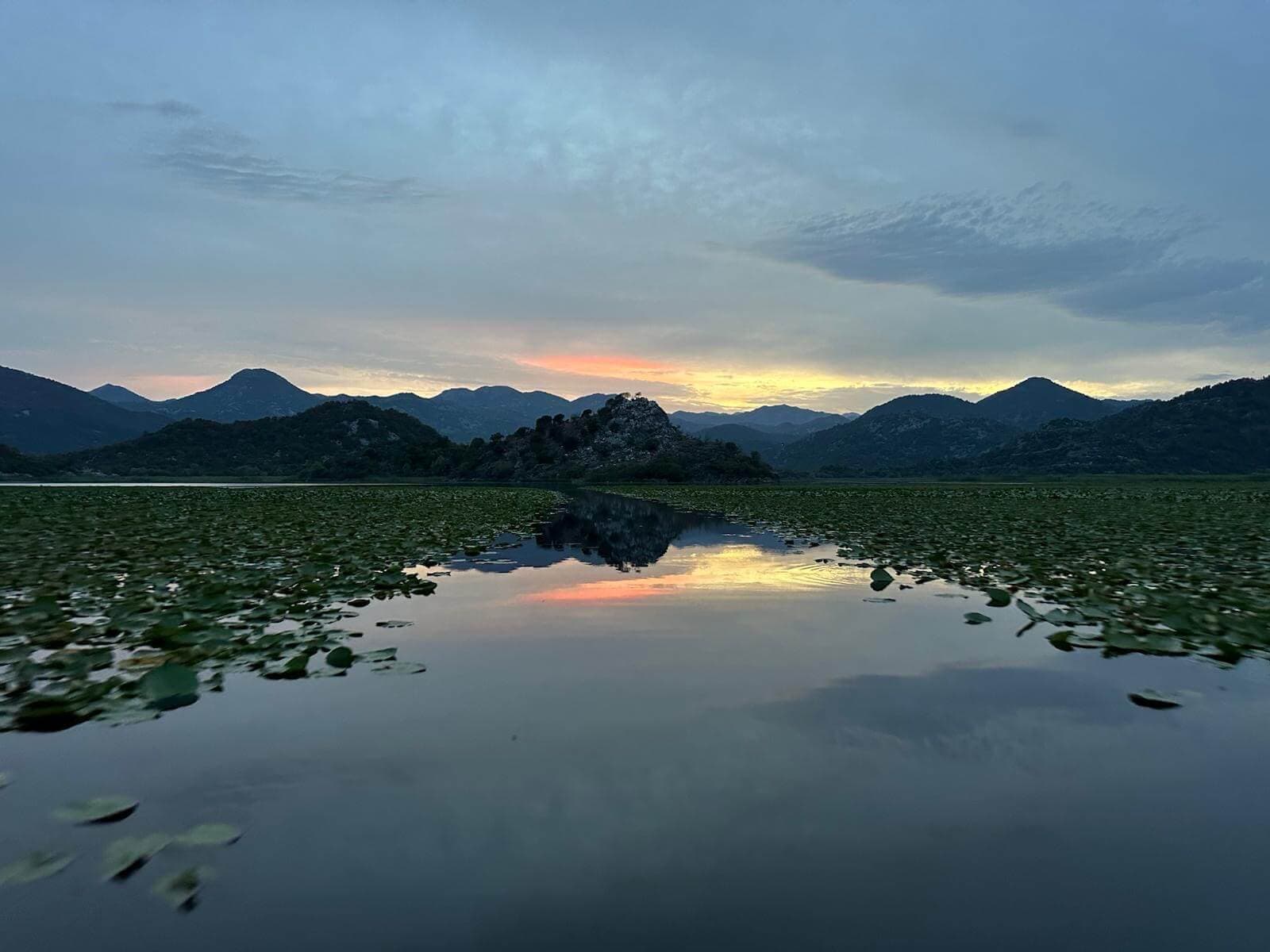
Location
Southern Montenegro
Surface area
370–530 km²
Status
National park since 1983
Bird species
280+ recorded
Park entrance fee
€5 per person
Tour season
April to October
Nearest city
Podgorica, ~40 km
Best departure
Rijeka Crnojevica
This guide covers what the lake is, what lives here, when to come, how to arrive, and where a boat tour should start. By the end you will know exactly how to plan a half-day at the lake.
What Lake Skadar Is
Lake Skadar sits in a karst basin fed by the Morača River and dozens of underwater springs. About two-thirds of its surface lies in Montenegro and one-third in Albania, where it is called Lake Shkodër. The lake drains to the Adriatic through the Bojana River.
It is a cryptodepression, which means parts of the lakebed sit below sea level. The water level swings with rainfall and snowmelt. In a wet winter the lake spreads to around 530 square kilometres. By late summer it can shrink toward 370. That seasonal breathing is what creates the flooded reed forests and shallow feeding grounds the birds depend on.
The Montenegrin shoreline is quiet and largely undeveloped. Two settlements anchor lake tourism: Rijeka Crnojevica in the northwest and Virpazar in the southwest. Both are launch points for boats. They lead to very different experiences, which we cover below.
Skadar Lake National Park
Montenegro declared the lake and its shoreline a national park in 1983. In 1996 it was added to the Ramsar list of Wetlands of International Importance. It also carries Important Bird Area status from BirdLife International. These designations are not marketing labels. They bring enforced rules: protected nesting zones, seasonal closures, and a buffer around the pelican colonies.
The park protects open lake, seasonally flooded forest, wet meadows and the surrounding karst slopes. Inside its boundaries you find historic island monasteries, Ottoman-era fortresses, abandoned fishing villages, and vineyards on the southern hills. For a deeper look at conservation history, park rules and the island sites, read the dedicated Skadar Lake National Park guide.
The park charges a €5 entrance fee per person. On a guided tour this is collected separately from the tour price.
The Wildlife: Why the Lake Is Famous
Lake Skadar is one of the most important bird wetlands in the Mediterranean basin. More than 280 species have been recorded over the years. On a single dawn tour in spring you can reasonably expect to see 30 to 50 of them.
The Dalmatian Pelican
The flagship species is the Dalmatian pelican, the largest freshwater bird in Europe with a wingspan close to three metres. It is listed as globally threatened, and Skadar holds one of the continent's most significant breeding colonies. You can identify it by its silver-grey bill and curly nape feathers. During the breeding season, from March to August, the colony nests on floating reed platforms.
A 200-metre buffer is enforced around the nesting sites. Approaching closer can make adults abandon their eggs. A licensed local guide knows exactly where the line sits, so you see the birds without harming them.
Other species
The lake also supports pygmy cormorants, great crested grebes, five species of heron, and the near-threatened ferruginous duck. Reeds block the view from shore, which is why birdwatching here happens from the water. For species identification, seasonal timing and viewing technique, see the full Lake Skadar birdwatching guide.
Water lilies
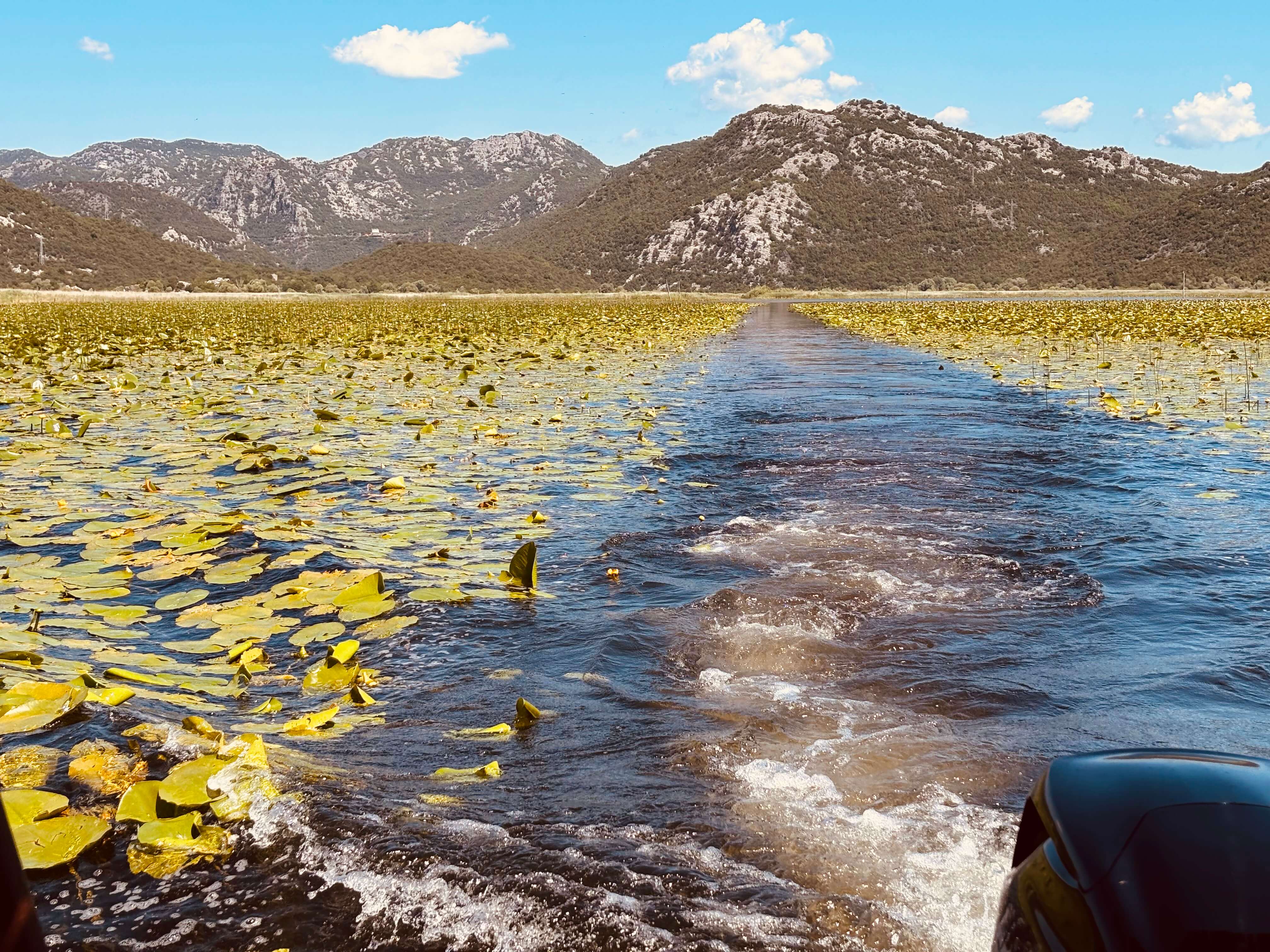
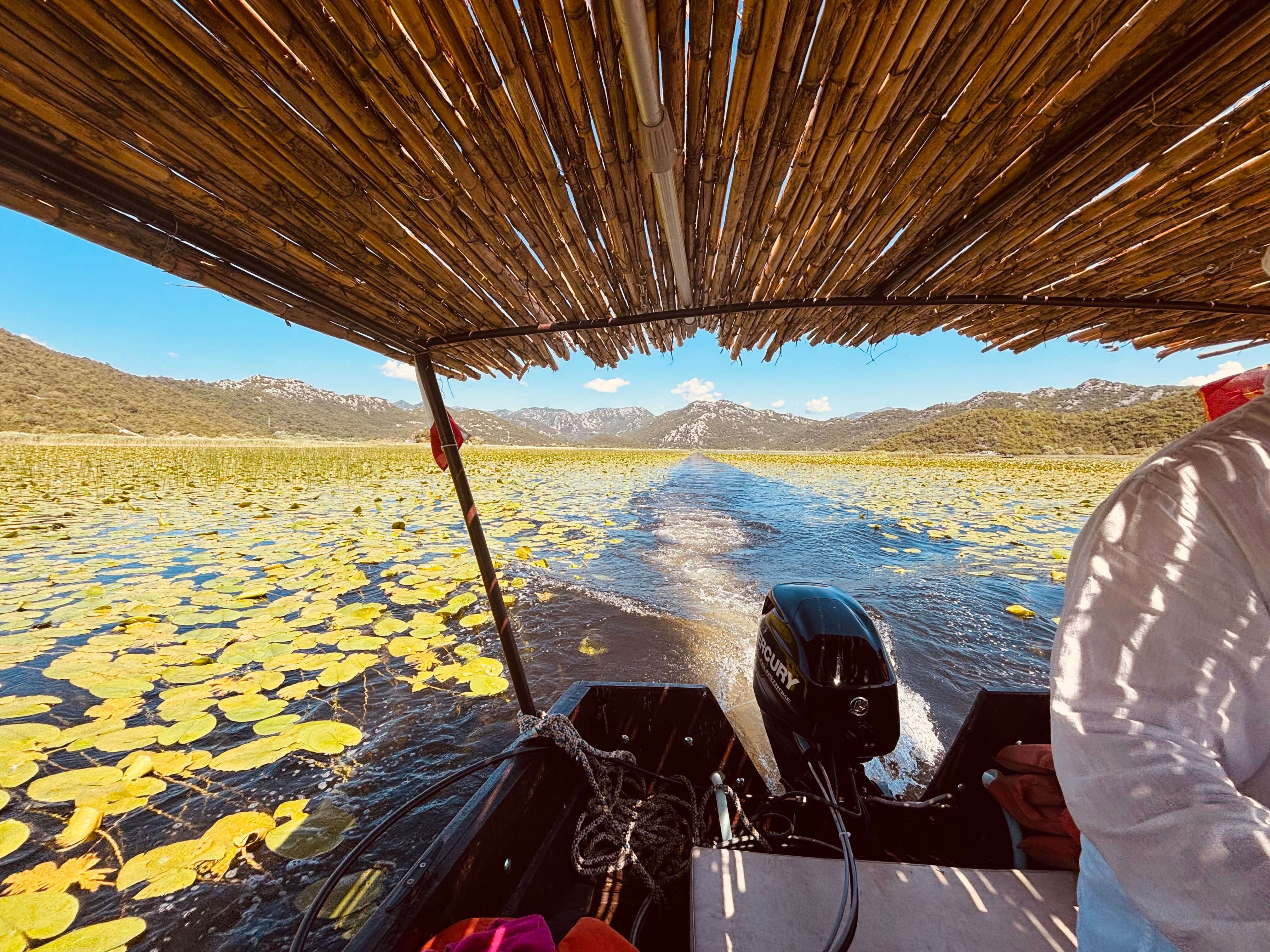
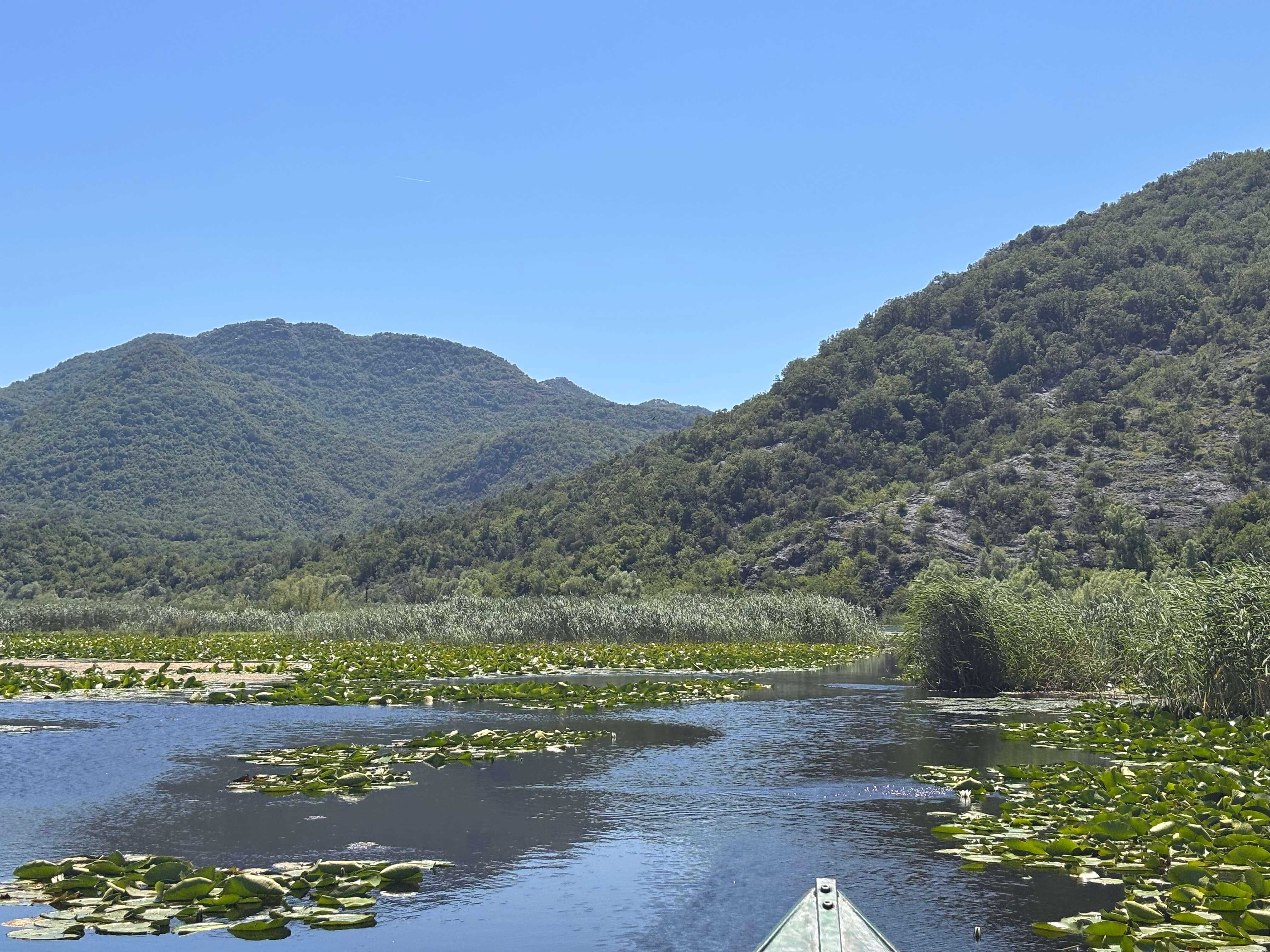
In summer the northern bays and river channels fill with white water lilies, Nymphaea alba. The bloom peaks in July and August, when fields of flowers cover the surface between the reeds. Boats move slowly through them. It is the single most photographed feature of the lake after the pelicans.
Things to Do at Lake Skadar
The lake rewards slow travel by water. The main activities are:
- Boat tours. The core experience. Tours reach reed channels, lily fields, swimming coves and island sites you cannot see any other way.
- Birdwatching. Best at dawn, from a small boat, between March and October.
- Swimming. The water is clean and reaches 25 to 27°C at the surface in July and August. Several coves are reachable only by boat. See the Lake Skadar swimming guide.
- Visiting villages. Karuč, an 1808 fishing village, and the abandoned settlement of Dodoši sit on the shoreline, reachable by boat.
- Viewpoints. Pavlova Strana, above Rijeka Crnojevica, looks down on the horseshoe bend of the Crnojevica River. It is a road stop, no boat needed.
A private boat tour combines most of these in one trip. The range runs from a 40-minute canyon glide to a three-hour full lake circuit, all departing from Rijeka Crnojevica. You can compare the options on the tours page.
Where a Boat Tour Should Start
This is the single most important planning decision, and most visitors get it backwards.
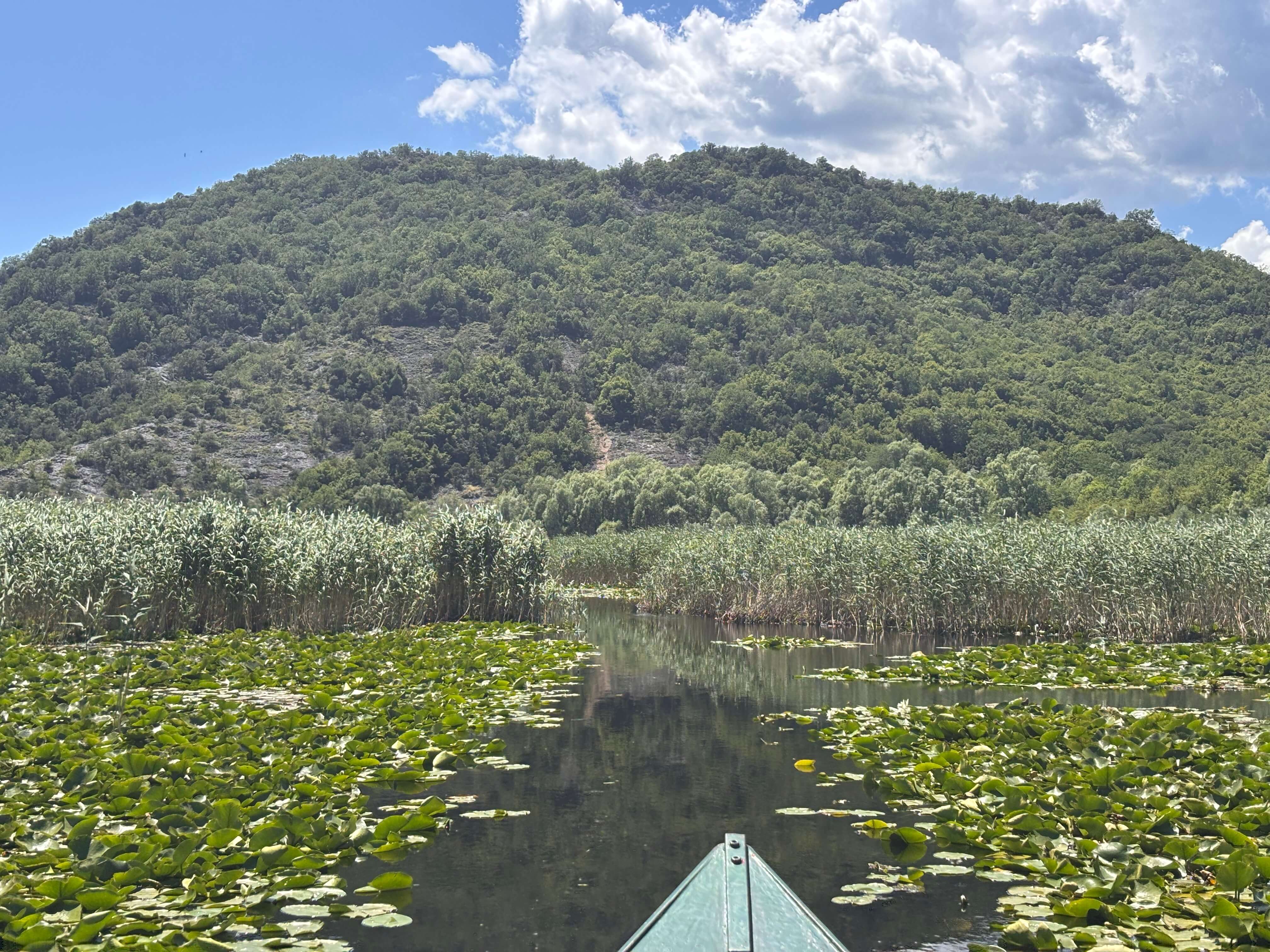
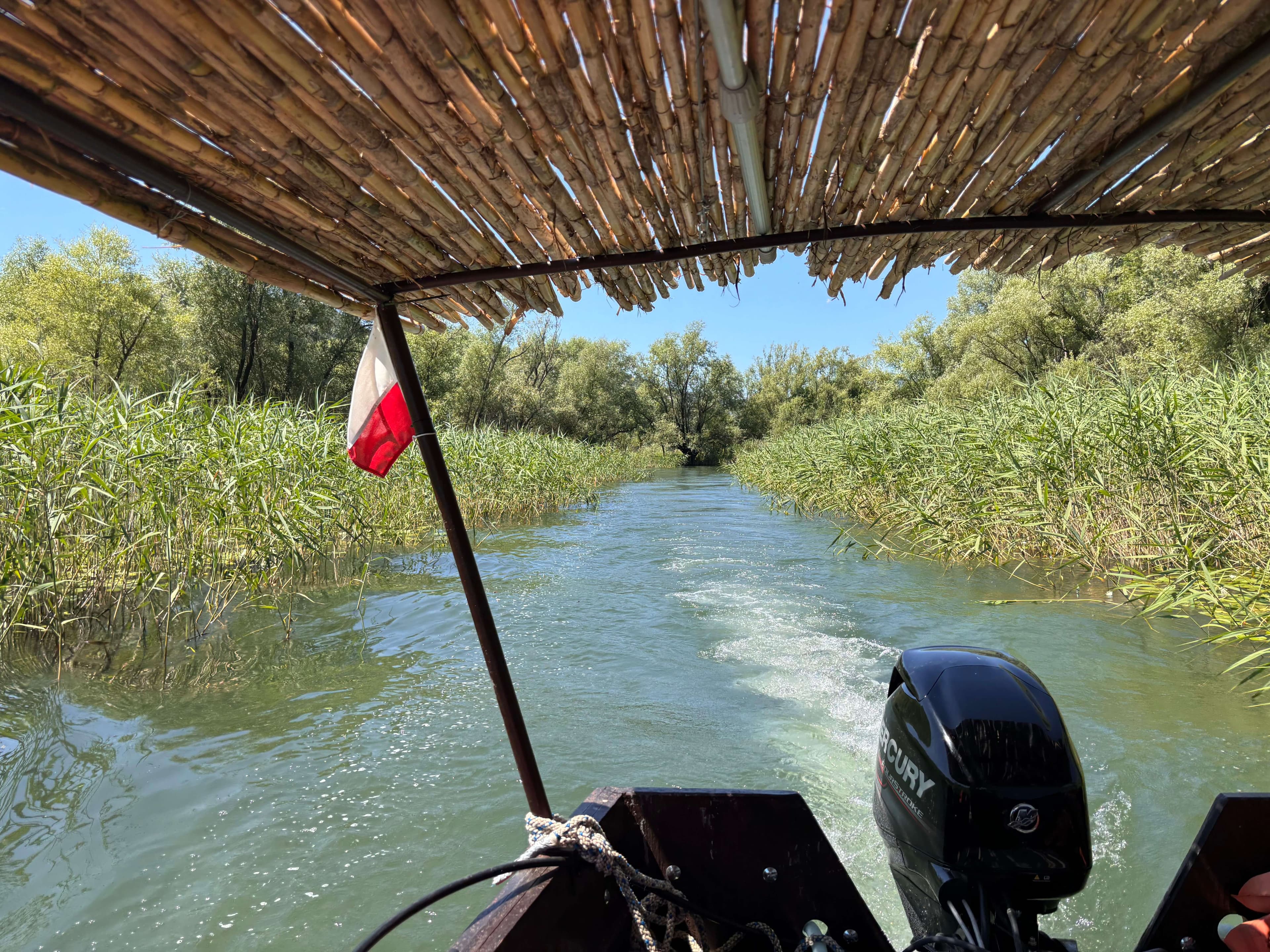
Almost every operator on the lake departs from Virpazar and heads straight onto the open water. Tours from Rijeka Crnojevica are different. They travel roughly 15 kilometres of river canyon first, past centuries-old stone bridges, water-lily fields and the pelican channels, before the open lake even begins. That canyon stretch is the part Virpazar tours skip entirely.
Rijeka Crnojevica is also closer to the main approach roads. It sits about 25 minutes from Podgorica and 20 minutes from Cetinje. The village is quieter than Virpazar, which crowds in peak season.
Both are valid departure points, and the right choice depends on what you want to see. We lay out the full comparison in Rijeka Crnojevica vs Virpazar.
When to Visit
The tour season runs from April to October. Each part of it offers something different.
- April to May: Spring migration. Peak birdwatching, fewer crowds, mild air, cool water.
- June to August: Warmest water for swimming, water lilies at full bloom, busiest months. Book dawn tours to avoid the heat.
- September to October: Autumn migration, comfortable temperatures, thinning crowds.
Birdwatching peaks in spring and again in autumn. Swimming is best from late June through August. For a month-by-month breakdown of weather and water temperature, see the best time to visit guide.
How to Get to Lake Skadar
The lake is well connected to the main Montenegrin cities. Approximate driving times to Rijeka Crnojevica:
- From Podgorica: about 25 minutes
- From Cetinje: about 20 minutes
- From Budva: about 50 minutes
- From Kotor: about 50 minutes
Public transport reaches Virpazar rather than Rijeka Crnojevica. Buses run from Podgorica to Virpazar roughly ten times a day, and the train stops there too. To reach Rijeka Crnojevica, a car or a transfer is the practical option. Full routes, times and fares are in the how to get to Lake Skadar guide.
Islands, Monasteries and History
The lake holds more than a dozen islands. Several carry medieval monasteries founded by the Crnojević and Balšić dynasties, including Beška, Starčevo, Moračnik and Vranjina. Grmožur, a small island fortress, once served as a prison and earned the nickname Montenegrin Alcatraz.
Besac Fortress overlooks Virpazar from a hill, built by the Ottomans in 1478. These sites tell the story of a borderland fought over for centuries. Many are reachable only by boat, which is part of why they remain quiet. The islands and monasteries guide covers each site in detail.
How Lake Skadar Compares
Montenegro has five national parks. Skadar is the wetland one: low, wide and warm, built around water and birds. Durmitor and Biogradska Gora, by contrast, are mountain parks with glacial lakes and forest. If you want alpine scenery, you go north. If you want birdlife, water lilies and a warm swim, Skadar is the lake to choose.
Within the Balkans, Skadar is simply the largest lake. It is bigger than Ohrid and Prespa, and unlike them it is a true wetland rather than a deep mountain basin.
Is Lake Skadar Worth Visiting?
Yes, for the right traveller. If you want a quiet half-day on the water, close wildlife, and scenery you reach by boat rather than by crowd, the lake delivers. If you need beach resorts and nightlife, the coast is a better fit. Most visitors spend half a day here and pair it with a stay in Kotor, Budva, Cetinje or Podgorica.
The decision that shapes the whole experience is where you start. A tour from Rijeka Crnojevica gives you the river canyon before the open lake. That is the part that turns a boat ride into the reason people remember the trip.
Plan your day on the water
The easiest way to see the canyon, the lily fields and the pelican channels in one trip is a private tour from Rijeka Crnojevica. Captain Dusko has worked these waters for over 15 years. The 1.5-hour 3 Rivers & Lake Unforgettable Jungle is the most popular starting point, and every tour is private with no strangers aboard. Compare all seven routes on the tours page, or message Captain Dusko directly to plan your visit.